
Real Estate Disputes
Construction Defect Claims in Tennessee: Warranties, Deadlines, and Damages
Construction defect disputes in Tennessee turn on the contract, the implied warranty for new homes, negligence and misrepresentation, contractor licensing, and a strict four-year statute of repose. Here is how each works, what damages look like, and what notice rules apply before suing.
Tennessee law checked as of October 2026. See also: 2026 Tennessee Law Changes for Property Owners and Businesses.
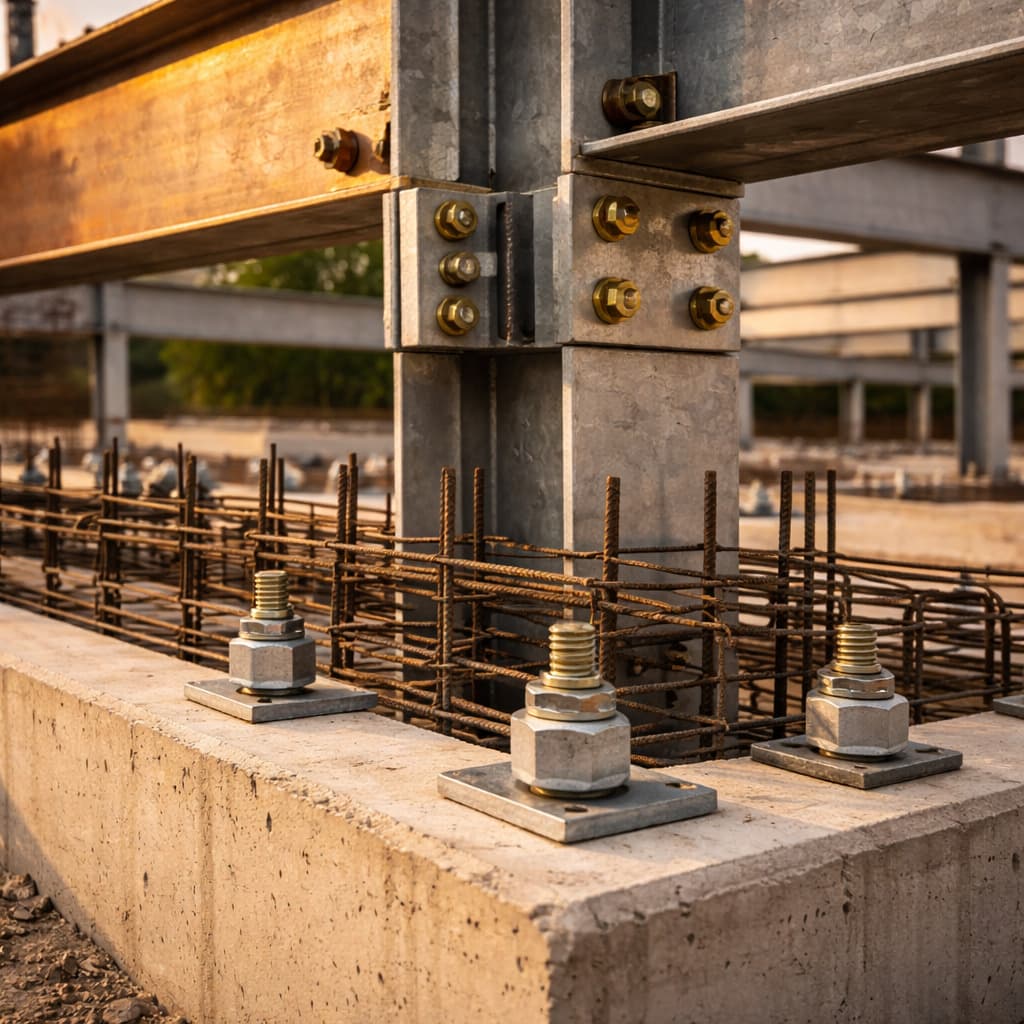
The foundation is cracking a year after move-in, or the remodel leaks every time it rains. In Tennessee, a construction defect claim depends on the contract, a few implied rules for new homes, the contractor's license, and deadlines that can expire before a defect even shows up.
Construction defects range from cosmetic finish problems to water intrusion and structural failure. In Tennessee, how a defect claim proceeds depends on what kind of project it was, what the contract says, who built it, and how much time has passed since the work was substantially completed.
The claims
- Breach of contract: the contractor did not build what the contract required, or did it defectively. Contract claims generally have a six-year limitations period (Tenn. Code Ann. § 28-3-109).
- Implied warranty for new homes: in Dixon v. Mountain City Construction Co. (Tenn. 1982), the Tennessee Supreme Court held that a builder-vendor of a new home impliedly warrants that the workmanship and materials meet the standard of the trade for homes in comparable locations and price range. The warranty applies only when the written contract is silent, and the contract can expressly disclaim it or substitute a different written warranty. The warranty sounds in contract (Garrett v. Hidden Valley Homes, LLC, Tenn. Ct. App. 2023).
- Negligence: a claim that the work fell below the standard of care. In Commercial Painting Co. v. Weitz Co. (Tenn. 2023), the Tennessee Supreme Court held that the economic loss doctrine applies only in products liability cases, so it does not bar tort claims arising from a construction services contract.
- Misrepresentation: false statements about the work, the materials, or the builder's qualifications. In Ferguson v. M. Brown Construction, Inc. (Tenn. Ct. App. 2024), the court affirmed holding a builder who misrepresented his qualifications individually liable for breach of contract and fraudulent misrepresentation.
- Consumer Protection Act: acting as an unlicensed contractor is treated as an unfair or deceptive practice under the Act (Tenn. Code Ann. § 62-6-136), which can allow treble damages for willful or knowing violations and attorney's fees.
Notice before suing
Tennessee has a statutory pre-suit process for construction defect claims (Tenn. Code Ann. § 66-36-101 et seq.), but it applies only to "commercial property," which the statute defines as any property other than property with one dwelling unit. It requires written notice to the contractor, gives the contractor a chance to inspect and respond with an offer to repair or pay, or a statement disputing the claim, tolls the statute of limitations for at least 180 days after the notice is received, and, on a party's motion, requires the court to abate, without prejudice, a suit filed before the process is followed. A contract's own notice and cure provisions take precedence over the statute. In Simpkins v. John Maher Builders, Inc. (Tenn. Ct. App. 2022), a case about a newly built home, the court held the statute did not apply because the claims related to residential rather than commercial property.
For a single-family home, notice and cure rights usually come from the contract. Many residential construction contracts and builder warranties require written notice and an opportunity to repair before a lawsuit, and those terms should be followed.
Deadlines and the statute of repose
Several overlapping time limits matter:
- Three years from accrual for injury to real property (Tenn. Code Ann. § 28-3-105).
- Six years for contract claims (§ 28-3-109). Courts apply the period that matches the gravamen of each claim (Benz-Elliott v. Barrett Enterprises, LP, Tenn. 2015).
- One year from discovery for Consumer Protection Act claims, and no more than five years after the transaction (§ 47-18-110).
- The statute of repose: an action for a deficiency in the construction of an improvement to real property must be brought within four years after substantial completion (§ 28-3-202). If the injury occurs during the fourth year after substantial completion, suit must be brought within one year after the injury, and in all events within five years after substantial completion (§ 28-3-203).
The repose period runs regardless of when the defect is discovered (Chrisman v. Hill Home Development, Inc., Tenn. 1998). It does not protect a person who committed fraud or wrongfully concealed the claim, or a person in actual possession or control of the improvement, as owner, tenant, or otherwise, when the deficiency caused the injury (§ 28-3-205). Since July 1, 2026, the four-year limit also does not apply to a counterclaim, cross-claim, or third-party complaint brought under Tenn. Code Ann. § 28-1-114(a), which allows those claims if they were not barred when the original claims in the lawsuit were filed (§ 28-3-202, as amended by 2026 Tenn. Pub. Acts ch. 684). So a builder sued within the repose period may be able to bring a claim against a subcontractor or designer after the four years have run. In Riccardi v. Carl Little Construction Co. (Tenn. Ct. App. 2021), a homeowner who sued nearly seven years after substantial completion survived summary judgment because there were factual questions about when the claim accrued and whether the builder had fraudulently concealed the defects.
Contractor licensing
A contractor on a project costing $25,000 or more must be licensed (Tenn. Code Ann. §§ 62-6-102(4)(A), -103(a)). Since July 1, 2026, the statute defines a project's total cost to include all labor, materials, equipment, subcontracted work, overhead, profit, and other expenses, whoever pays them and whether the work is done under one contract or several (§ 62-6-102, as amended by 2026 Tenn. Pub. Acts ch. 1039). An unlicensed contractor that should have been licensed may recover only its actual documented expenses, proven by clear and convincing evidence, and has no lien rights (§ 62-6-103). An owner who personally violates § 62-6-136 can be held personally liable for his or her own representations, acts, or omissions despite the company's limited liability (§ 62-6-136(c)).
Home improvement work has its own rules in counties that have adopted them (§ 62-6-516). There, remodeling contracts over $3,000 and under $25,000 generally require a home improvement license, a written contract with required terms (§ 62-6-508), and a $10,000 bond or letter of credit that a damaged homeowner can sue on directly (§ 62-6-506(h)). The Tennessee Board for Licensing Contractors lists the participating counties, which have included Davidson, Robertson, and Rutherford.
Damages
The usual measure of damages for defective construction is the reasonable cost of repair. If the builder shows that the cost of repair is unreasonable compared with the diminution in the property's value, the measure can shift to the loss in value (GSB Contractors, Inc. v. Hess, Tenn. Ct. App. 2005). Attorney's fees are generally recoverable only under a contract or statute, so the contract's fee clause matters.
Which claims fit and which deadlines still apply depend on the contract, the dates, and the defect. If you are a homeowner, owner, or contractor dealing with a construction defect in Middle Tennessee, my office can review the contract and the timeline with you. See also construction contracts.
Educational disclaimer: This article provides general Tennessee educational information only and is not legal advice for any specific project, claim, or deadline.
Official resources
https://naultlaw.com/articles/construction-defect-claims-tennessee
If this article describes your situation
The intake form takes about three minutes. You'll hear back within one business day if the matter is a fit.
If any of this sounds like your situation
The intake is structured and short: name, contact, opposing party, brief description. You'll hear back within one business day.